Exploring Ireland’s ‘Dutch School’ artists in the NIVAL Collections
Student Ella Solimene of the UCD MA in Library and Information Science undertook an internship at NIVAL this summer as part of her course accreditation. In the following piece, Ella talks about the collections at NIVAL that interested her the most.
For the past two months, I’ve had the opportunity to participate in an internship at NIVAL as part of the final semester for my Masters in Library and Information Science program at University College Dublin. During my time at NIVAL, I’ve worked on a number of collections, including the Ernest Hayes Collection and the Norah O’Kelly Collection. I also helped the Archives Assistant put the finishing touches on the Cecil O’Donohue Lace Collection. I’ve gained an overall broader understanding of Irish art history post-1900, and through it all I became interested in one particular group of artists in Ireland, known as the ‘Dutch School’. They were an influx of Dutch artists and designers who came to Ireland in the 1950s and who had a huge impact in shaping art and design in Ireland from the ’50s and ’60s onward.
The first Dutch artist who piqued my interest was Pieter Sluis. Sluis was born in Zwolle, Holland, in 1929, and moved to Ireland in 1956 to begin working in graphic design. He was commissioned by many notable Irish brands and companies such as Guinness, the Irish Heart Foundation and Aer Lingus. Sluis’ posters were bright, energetic, and possessed a very modern, yet simultaneously childlike quality to them – this poster for the Republic of Ireland football team being an excellent example of the work he was producing.
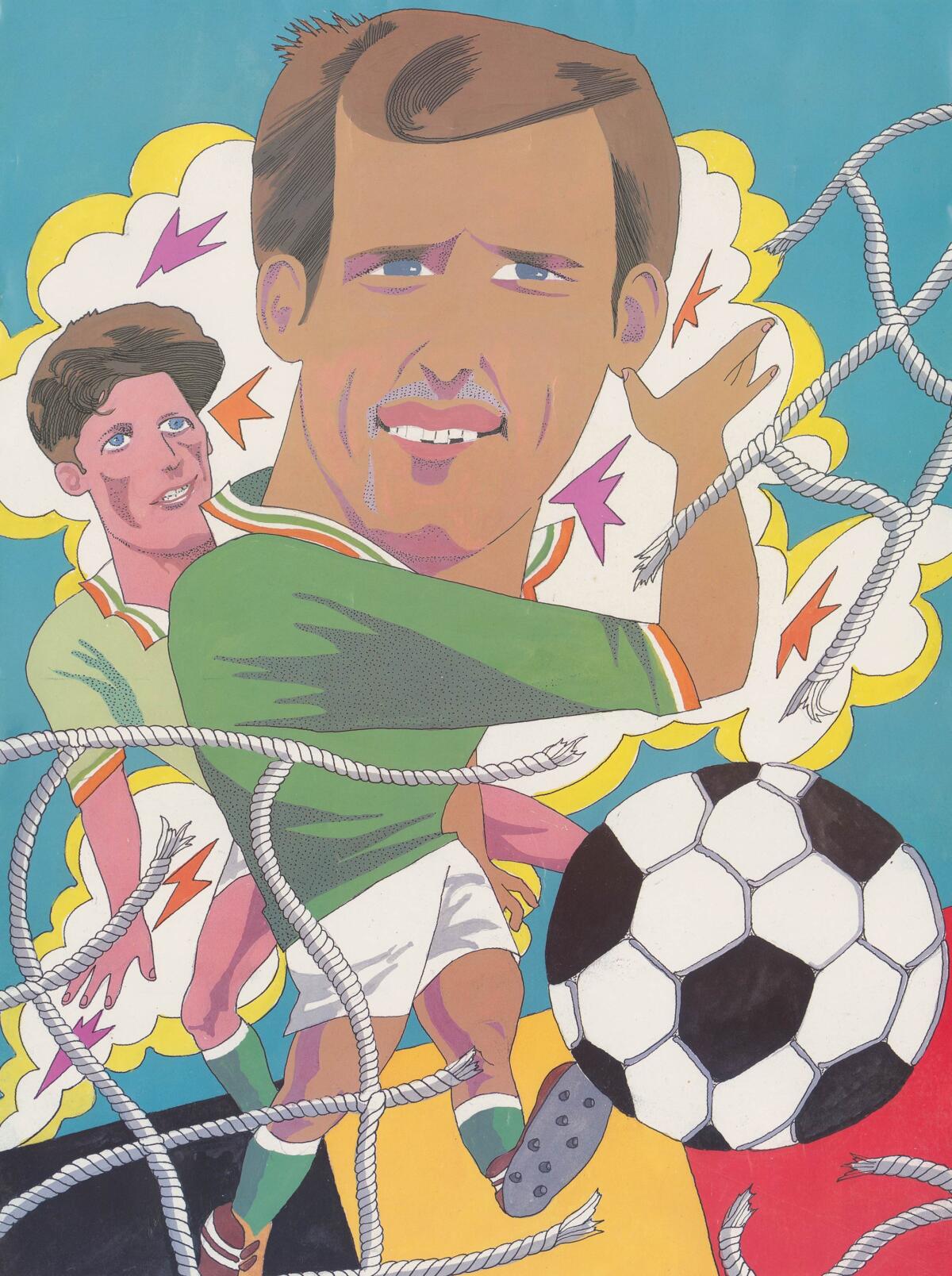
Much of this style can be attributed to recent trends that were happening in mainland Europe at the time. Just a few years before Sluis moved to Ireland, an avant-garde art movement by the name of CoBrA was formed. The name was coined by the initial members’ home cities: Copenhagen (Co), Brussels (Br) and Amsterdam (A). CoBrA was formed during a time when artists, especially those living in the occupied Netherlands, felt disconnected from the art world. Once the war ended, there was a desire to leave behind any sort of realism or naturalism. They wanted to create abstract pieces that were filled with colour and movement and mimicked the messy style of children’s artwork, with many members of the group very inspired by artists such as Paul Klee (CoBrA Museum, n.d.; Christie’s, 2022). This movement is evident in not only Sluis’ work but in many of the other Dutch artists who came to Ireland.
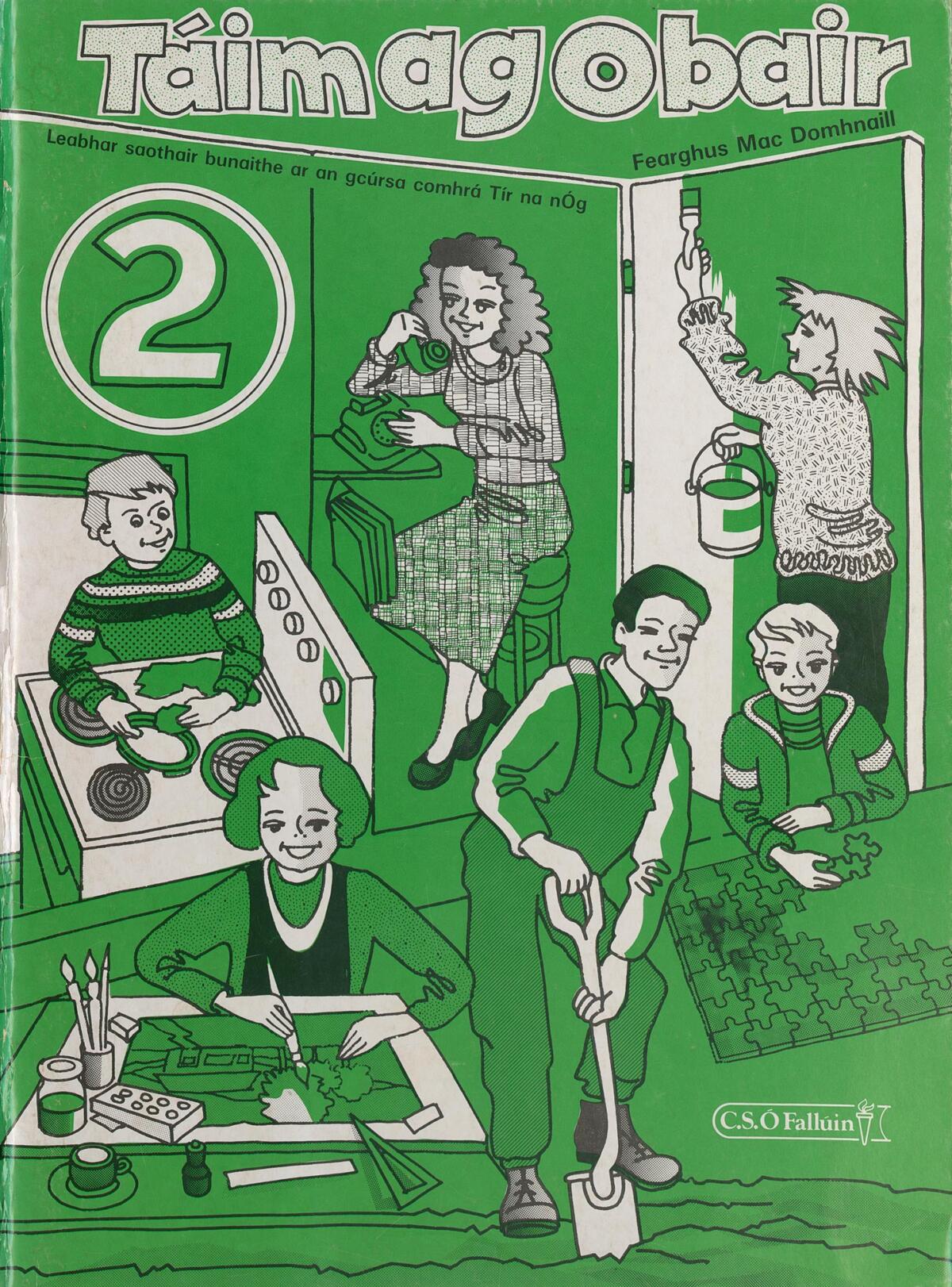
My research from Sluis then carried over to the other Dutch artists that had come to Ireland, and NIVAL has collections for several of them including an extensive one on Cor Klassen. Another prominent artist, Klassen was born in Amsterdam in 1926 and having studied design at the Gerrit Rietveld Academie, he moved to Ireland in 1956 to work for O’Kennedy Brindley Advertising. He was one of the most prolific members of the Dutch School, designing over 170 book covers between 1958 and 1988, often for school books, with copies of many of the books he designed being included in his archive at NIVAL.
This particular book is striking to me, as it showcases Klassen’s graphical Dutch style but with the content of the book being an Irish language workbook for students.
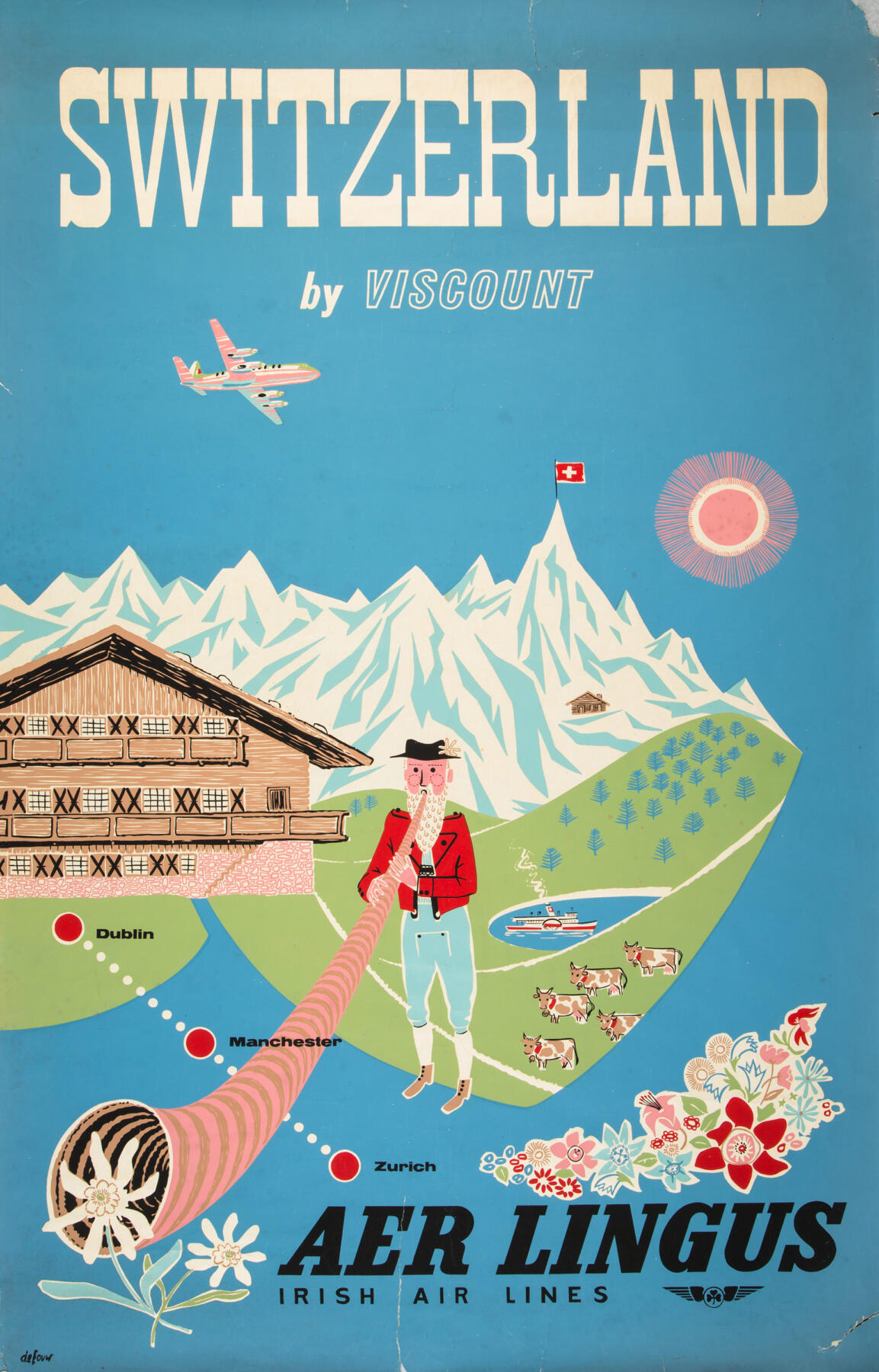
After Klassen, I encountered work by another artist named Jan de Fouw. Born in Holland in 1929 and having moved to Ireland in 1951, he worked as a graphic designer for a range of companies including the Irish Tourist Board, Aer Lingus, Bord na Móna and the Office of Public Works. He began working at the magazine Ireland of the Welcomes from 1951 and became Art Director in the 1980s. This is one of his Aer Lingus posters. Similar to Piet Sluis’ poster, this one also has a more graphical, cartoon-ish style with pastel colours.
After researching the specific artists from the Dutch School, I was led to the Kilkenny Design Workshops (KDW) Archive which NIVAL holds. I learned that the KDW began in 1959 when the Córas Tráchtála Teo (CTT), the Irish Trade Board, was founded as a way to market and export Irish goods abroad. They commissioned the ‘Scandinavian Report’, which was an analysis of the design industry in Ireland done by prominent Scandinavian designers who visited Ireland in 1961 to carry out this research. The end product was the creation of the KDW in 1963 in order to establish state-sponsored design research and production to therefore increase Irish export. A number of designers from England, Scandinavia and Germany were brought over to Ireland to work on Irish industrial design exports. Their work included ceramics, metals, candlemaking, woodturning, graphic design and textiles (O’Brien, 2017).
My research into the KDW helped my understanding of why there was such an influx of Dutch designers coming to Ireland. In the case of the KDW, it was the government sponsoring foreign artists to come and modernise their design for financial success. The Dutch School was very similar, with Irish companies hiring Dutch artists to work on advertisements for brands and purposes that were very closely tied to Irish culture and identity, such as Piet Sluis’ Republic of Ireland football team poster, the Irish school books Cor Klassen designed and Jan de Fouw’s Aer Lingus posters.
What I’m most intrigued by after diving into this topic is how the Dutch School artists were influenced by the isolating effects of WWII and CoBrA, and how this led them to distance themselves from more traditional art, which was precisely why Ireland likely found these artists so desirable. The result was design that is neither fully Dutch nor Irish, but a unique combination of both cultures, styles and identities.
References
Christie’s. (2022). What Is CoBrA? A Guide to the Post-War Avant-Garde Movement. Available at: https://www.christies.com/en/stories/cobra-art-group-collecting-guide-16a8204026e0416d84db8e5d9b4d7cc5 (Accessed: 13 July 2026).
CoBrA Museum. (n.d.). CoBrA Movement. Available at: https://cobra-museum.nl/museum/cobra-movement/?lang=en (Accessed: 13 July 2026).
O’Brien, S. (2017). ‘Made in Ireland’? National Narratives and Hybrid Identities in Irish Design History. Institute of Art, Design and Technology (IADT) Research Repository. Available at: https://research.iadt.ie/en/publications/made-in-ireland-national-narratives-and-hybrid-identities-in-iris/ (Accessed: 13 July 2026).
A number of items from NIVAL’s Irish Poster Collection and the Jan de Fouw Collection have been made available to the National Print Museum on loan for their current exhibition Come Fly With Me: Aviation, tourism and Irish design. The exhibition runs from 17 July to 17 December 2026 and features a number of works by the Dutch designers mentioned in Ella’s article as well as Irish designers including William Curran.